
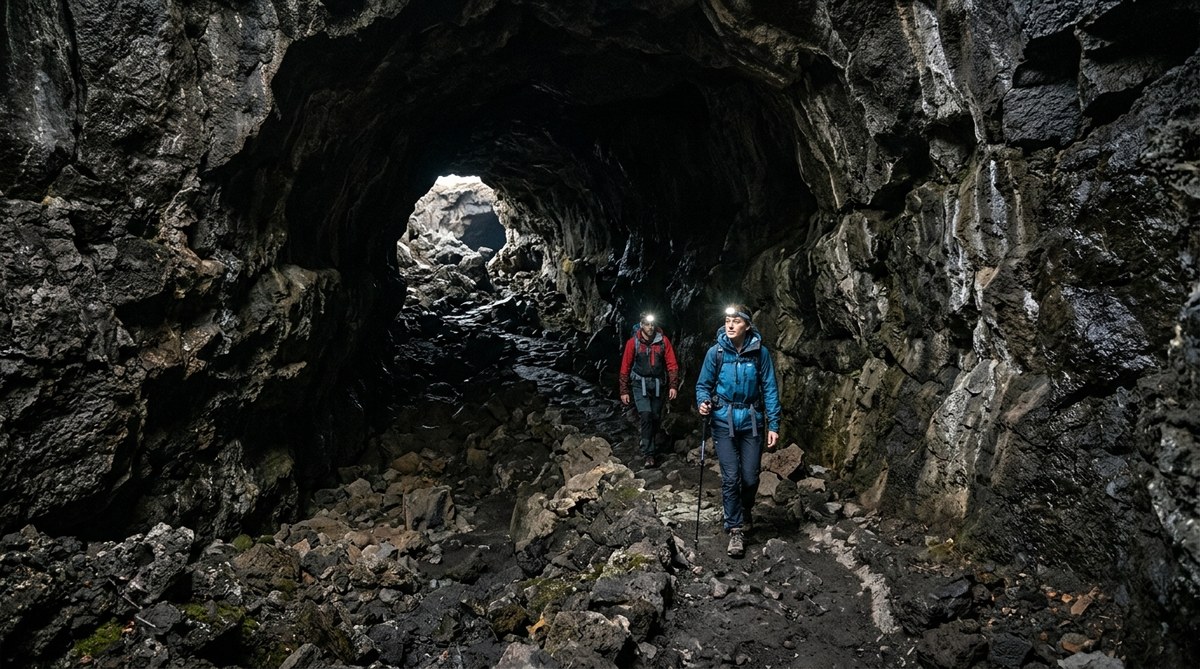
The first time you stand at the mouth of a lava tube, the world tilts. One moment you are on a sunbaked trail scattered with volcanic rock. The next, you are peering into a dark throat that plunges into the earth. These tunnels were once rivers of molten rock, draining away from an eruption and leaving behind hollow corridors. Today they are some of the most surreal hiking terrain on the planet. But hiking underground is not the same as a ridge walk. The rules change. The risks shift. And the rewards are unlike anything above ground.
Hiking a lava tube requires more than a headlamp. You need the right gear to handle cold, uneven terrain and total darkness. Start with short, developed caves like Lava Beds National Monument in California. Always tell someone your plan. Bring three light sources. Watch for sharp lava rock and low ceilings. Respect the fragile formations. Go slow. Let your eyes adjust. The silence underground is part of the magic.
What Makes a Lava Tube Hike Different
Lava tubes form when the surface of a lava flow cools and hardens while the molten interior keeps moving. Once the eruption stops, the liquid drains away, leaving a pipe. These tunnels can stretch for miles. Some are tall enough to walk upright. Others require crawling on hands and knees.
The biggest difference from a normal hike is the absence of light. Total darkness changes everything. You lose depth perception. Distances feel wrong. Your brain struggles to judge the height of a ceiling or the drop of a step. That is why learning how to hike a lava tube starts with understanding the environment before you ever step inside.
Gear You Need for an Underground Hike
Most people overpack for the surface and underprepare for the cave. The list below covers the essentials for a safe trip.
- Three independent light sources. A headlamp is mandatory. Bring two backups, like a small flashlight and a glow stick. Batteries die. Lights get dropped.
- Helmet. Lava tubes have low ceilings and sharp edges. A single misstep can mean a cracked skull on basalt.
- Gloves. You will use your hands for balance. Lava rock is like glass. It cuts easily.
- Sturdy boots. Ankle support matters. The floor is uneven, often covered in rubble called “breakdown.”
- Knee pads. For tubes that require crawling, knee pads prevent bruises and cuts.
- Layers. Caves stay around 50 to 55 degrees Fahrenheit year round. A light jacket or fleece is enough, even in summer.
- Water and snacks. You sweat more than you think. Dehydration sneaks up on you in the cool air.
For a deeper look at packing for any trail, check out these essential outdoor gear every hiker should pack for long trails.
How to Hike a Lava Tube in 6 Steps
Follow this process to stay safe and get the most out of your underground adventure.
-
Research the tube before you go. Check the length, ceiling height, and whether it requires a permit. Some tubes flood after rain. Others have sensitive bat populations that close during certain seasons. Always check the land management website.
-
Arrive early. Give yourself plenty of daylight. Even if the tube is short, you want a buffer for unexpected challenges. Parking lots at popular tubes fill by mid-morning on weekends.
-
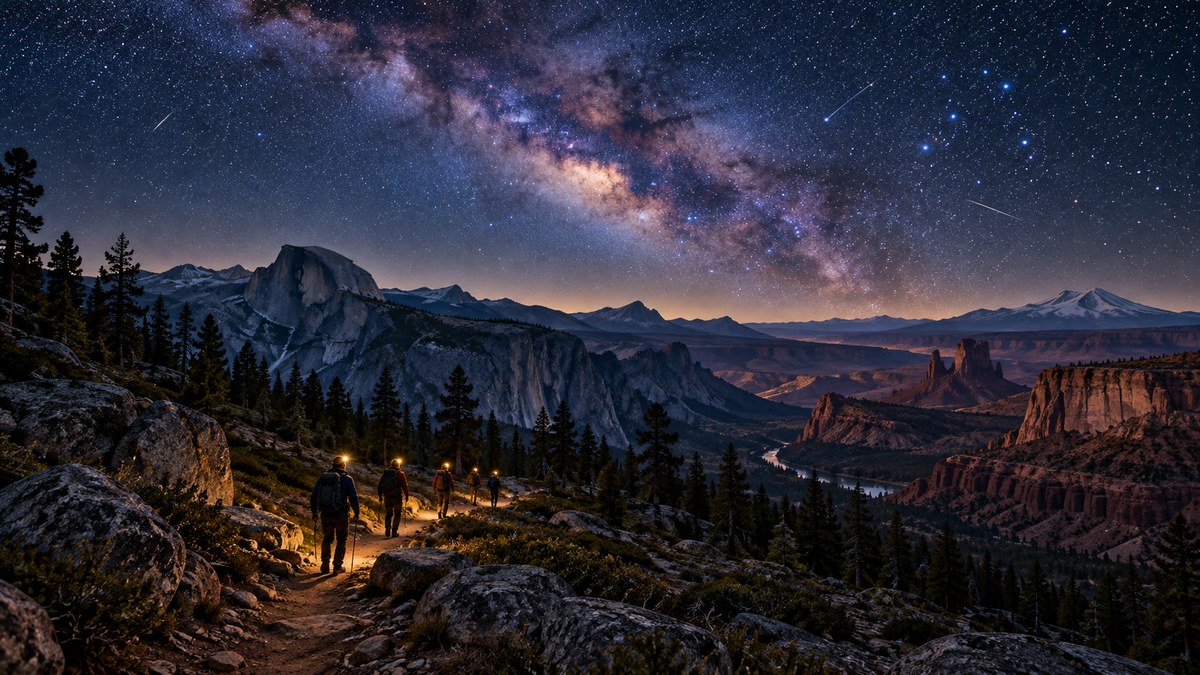
Stage your gear at the entrance. Put on your helmet and turn on your headlamp before you go in. Let your eyes start adjusting while you are still in the twilight zone near the mouth.
-
Move slowly and deliberately. Your natural pace will feel too fast. Slow down. Plant each foot. Scan the ground ahead for loose rocks and sudden drops. Look up for low ceilings.
-
Mark your route in undeveloped tubes. In wild caves without trails, leave small cairns or use reflective tape to find your way back. Tubes can branch into mazes. Getting turned around in the dark is dangerous.
-
Turn back while you still have half your battery life. Never push to the edge of your light source. Reserve enough power to get out safely.
Common Mistakes and How to Avoid Them
Even experienced hikers make errors when they go underground. This table breaks down the most frequent problems and the simple fixes.
| Mistake | Why It Happens | How to Fix It |
|---|---|---|
| Only one light source | Assumption that a phone flashlight is enough | Carry three independent lights. Test batteries before each trip. |
| Wearing shorts and a t-shirt | Underestimating the cold | Bring a jacket even on a hot day. The cave stays cool. |
| Walking too fast | Disorientation from darkness | Consciously slow your pace. Count steps if needed. |
| Touching formations | Curiosity or lack of awareness | Keep hands off. Oils from skin damage delicate mineral growths. |
| No communication plan | Spontaneous trip with no check-in | Tell a friend the tube name and your expected return time. |
| Ignoring weather forecasts | Flash flood risk in low-lying tubes | Never enter a tube if rain is in the forecast. Water can rise fast. |
“The biggest danger in a lava tube is not getting lost. It is getting comfortable. The darkness tricks you into thinking you have more time than you do. Always respect the cave. It does not care about your schedule.” — Ranger Sarah Koa, Hawaii Volcanoes National Park
Best Lava Tube Hikes to Practice Your Skills
Once you know how to hike a lava tube, you need a place to try it. These destinations range from beginner-friendly to advanced.
Lava Beds National Monument, California
This is the best place in the United States to learn. The monument has over 800 caves. Many are short, well-marked, and open to the public without a guide. Mushpot Cave is a great first tube. It has a smooth floor and high ceilings. For a longer challenge, try Sentinel Cave, which has a loop route and requires some scrambling.
Thurston Lava Tube, Hawaii Volcanoes National Park
This tube on the Big Island is one of the most accessible in the world. It sits at the end of a short paved trail. The cave is large and open, with a steep metal staircase at the entrance. It is a walk-down, not a crawl. Perfect for beginners who want to experience the scale of a lava tube without squeezing through tight passages.
Kazumura Cave, Japan
Not in the U.S., but worth the flight. This tube on the island of Hokkaido is one of the longest in the world. It has guided tours that take you deep underground past ice formations that last year-round. The trail is well-maintained, but the sheer size of the cave is humbling.
Undara Lava Tube, Australia
Located in Queensland, these tubes are massive. Some sections are tall enough to fit a building. The park offers guided tours that explain the geology and history. The landscape above ground is equally surreal, with savannah grasslands stretching to the horizon.
For more ideas on where to go, browse these top adventure travel destinations for thrill seekers in 2026.
Safety Rules That Never Change
Some rules apply to every lava tube hike, no matter your skill level.
- Never hike alone. If you go solo, leave a detailed trip plan with someone responsible.
- Check for bats. Many tubes are seasonal homes to bat colonies. Disturbing them is illegal and dangerous.
- Watch for carbon dioxide buildup. Some tubes have low spots where CO2 settles. If you feel dizzy or short of breath, turn back immediately.
- Do not enter a tube during or after heavy rain. Flash floods are rare but deadly.
- Stay on the trail. In developed tubes, the path is marked for a reason. Going off-trail damages fragile formations and increases your risk of injury.
How to Prepare for Your First Lava Tube Hike
Start with a tube that matches your comfort level. If you are claustrophobic, choose a wide tube like the Thurston Lava Tube. If you want a physical challenge, find a longer tube with breakdown sections that require climbing.
Practice using your headlamp in your backyard at night. Get used to the limited field of view. Walk over uneven ground in the dark. Build muscle memory for slow, deliberate steps.
Talk to rangers before you go. They know the current conditions, including recent rockfalls or closures. They can also tell you which tubes have the most interesting features, like lava stalactites or ice patches.
For more general planning advice, read these top tips for planning a safe and enjoyable trail hike.
The Etiquette of Underground Hiking
Lava tubes are fragile environments. A single touch can destroy a formation that took centuries to grow. Follow these principles to leave no trace.
- Do not touch the walls. The natural oils on your skin leave marks and prevent future growth.
- Do not leave cairns in developed tubes. Park service markers are sufficient. Extra rocks confuse other hikers.
- Pack out all trash. That includes organic waste like apple cores. Nothing decomposes well in a cave.
- Keep noise low. Sound carries in tunnels. Respect the quiet for others and for the wildlife.
- Stay on designated paths. In wild tubes, avoid widening the trail by walking on the same path as others.
Why the Effort Is Worth It
Standing in a lava tube is like stepping into the planet’s circulatory system. You are inside a vein that once carried fire. The walls are glassy, streaked with minerals, and shaped by forces that are hard to comprehend. The silence is heavy. The air smells like wet stone and ancient dust. Above ground, the sun is beating down. Below, the world is cool, dark, and patient.
Learning how to hike a lava tube is not just about the gear or the safety checklist. It is about trusting a different kind of navigation. One that relies on touch, memory, and the small circle of light from your headlamp. It is a skill that changes how you see the ground beneath your feet. And once you have done it, every trail above ground will feel a little less mysterious.
Taking the First Step Below
The best way to learn is to go. Pick a tube from the list above. Pack your gear. Tell a friend where you are heading. Then walk into the dark. Let your eyes adjust. Listen to the drip of water somewhere ahead. Feel the cool air on your face. Move slow. Respect the cave. And when you step back into the sunlight, you will carry a memory that no mountain summit can replace. That is the real reason to learn how to hike a lava tube. It is not about conquering something. It is about entering a world that was never meant for us, and leaving it exactly as we found it.


Leave a Reply