
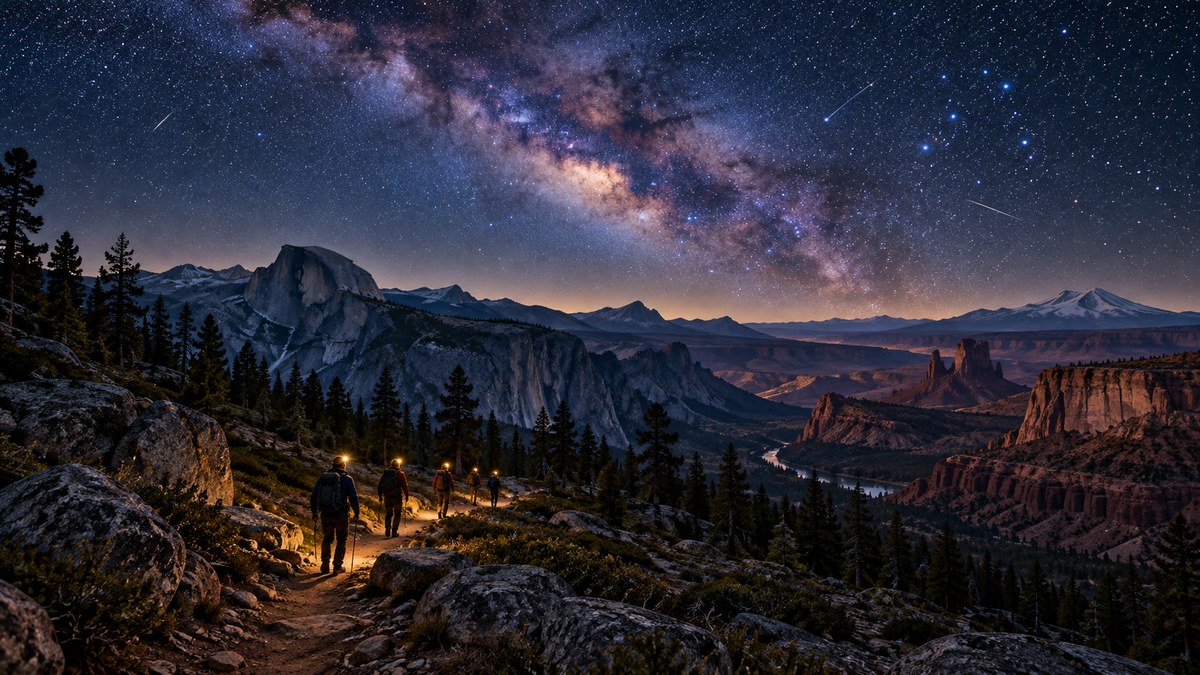
The Milky Way spills across the sky like a river of stars. You stand on a ridge, no headlamp needed, just the glow of the galaxy above. That feeling of being small in the best possible way is why night hiking exists. And in the United States, our national parks offer some of the darkest skies on the planet. Whether you are a seasoned hiker or someone who just bought their first pair of boots, these trails are designed to get you under the stars with minimal fuss.
The best night hikes for stargazing combine low light pollution, easy terrain, and open views. We have selected five trails across U.S. national parks that are beginner-friendly, safe, and offer exceptional celestial views. Each trail is under 3 miles round trip, requires no technical skill, and is best hiked during a new moon.
Why Night Hiking Changes the Way You See the Outdoors
Daytime hiking is about the view. Night hiking is about the universe. When you step onto a trail after dark, your senses sharpen. The air feels cooler. The sounds of the forest shift. And the sky becomes the main event. Many people assume you need to be an expert to hike at night. That is not true. The best night hikes for stargazing are short, flat, and wide open. You do not need ropes, crampons, or a GPS. You just need a good headlamp, a sense of wonder, and a plan.
National parks like Death Valley, Great Sand Dunes, and Big Bend are certified International Dark Sky Parks. That means they actively protect their night skies from light pollution. For anyone looking for the best night hikes for stargazing, these parks are the gold standard.
The 5 Best Night Hikes for Stargazing in U.S. National Parks
Each of these trails was chosen for its ease of access, stunning night sky views, and beginner-friendly rating. They are perfect for families, solo hikers, and amateur astronomers.
1. Mesquite Flat Sand Dunes Trail, Death Valley National Park
Death Valley is one of the darkest places in North America. The Mesquite Flat Sand Dunes are a short, 2-mile round trip hike that feels like walking on the moon. The dunes rise gently, and there is no elevation gain to speak of. You can lay out a blanket on the sand and watch the stars.
Go during a new moon. The lack of ambient light makes the Milky Way pop like you are looking at a photograph. Bring a red flashlight to preserve your night vision. The sand is soft, so wear closed-toe shoes.
2. High Dune Trail, Great Sand Dunes National Park and Preserve
At the edge of the Rocky Mountains, the Great Sand Dunes offer some of the best night hikes for stargazing in the country. The High Dune Trail is a 2.5-mile round trip that climbs the tallest dune in the park. It is a bit of a workout, but the view from the top is worth every step.
The sand dunes block any light from the nearby town of Alamosa. On a clear night, you can see the Andromeda Galaxy with the naked eye. The park offers monthly stargazing programs during the summer. Check their calendar before you go.
3. Lost Mine Trail, Big Bend National Park
Big Bend is remote. That is its superpower. The Lost Mine Trail is a 4.8-mile round trip that winds through the Chisos Mountains. While it is the longest trail on this list, it is well maintained and has a gentle grade. The summit offers a 360-degree view of the desert sky.
Big Bend is one of the least visited national parks, which means less light pollution and fewer people. You might have the entire trail to yourself. Bring plenty of water, even at night. The desert air is dry.
4. Artist’s Palette Drive Overlook, Death Valley National Park
Technically a short walk from a parking area, the Artist’s Palette Overlook is a 1-mile loop that offers incredible night sky views. The colorful hills that give the area its name are even more striking under moonlight. This is a great option for families with young kids or anyone who wants a zero-effort stargazing experience.
Because it is so accessible, it can get crowded on weekends. Go on a weeknight or during the off-season for the best experience.
5. Taggart Lake Loop, Grand Teton National Park
Grand Teton is famous for its jagged peaks, but the night sky here is equally dramatic. The Taggart Lake Loop is a 3-mile trail that circles a glacial lake. The reflection of the stars on the water is unforgettable.
This trail is popular during the day, but at night it is peaceful and quiet. The park is working to reduce light pollution, and the skies are getting darker every year. Bring bear spray. You are in grizzly country.
How to Plan a Successful Night Hike for Stargazing
Planning is everything. You cannot just show up at a trailhead at 2 AM and hope for the best. Here is a step-by-step process that works for any national park.
-
Check the moon phase. A full moon washes out the stars. The best night hikes for stargazing happen during the new moon or a few days before and after. Use a moon phase calendar.
-
Scout the trail during the day. Walk the route in daylight so you know where the obstacles are. Mark any tricky sections in your mind. This is the single most important safety step.
-
Arrive early. Get to the trailhead at least 30 minutes before sunset. Watch the sun go down. Let your eyes adjust to the dark. Do not turn on your headlamp until you absolutely need it.
-
Use red light. Red light preserves your night vision. Most headlamps have a red mode. If yours does not, buy a red filter. It makes a huge difference.
-
Bring the right gear. You need a headlamp, extra batteries, warm layers, water, and a snack. Even in summer, temperatures drop after dark. A light jacket can save your trip.
-
Tell someone your plan. Leave a note or text a friend. Cell service is spotty in most national parks. Let someone know where you are and when you expect to be back.
Essential Gear for Night Hiking
You do not need much, but the gear you bring matters. Here is a table that breaks down the must-haves and the nice-to-haves.
| Gear Item | Why It Matters | Common Mistake |
|---|---|---|
| Headlamp with red mode | Preserves night vision | Using white light blinds you for 20 minutes |
| Extra batteries | Headlamps die fast | Assuming fresh batteries last all night |
| Warm layers | Temperatures drop after sunset | Wearing only a t-shirt in the desert |
| Water | You still sweat at night | Forgetting to hydrate |
| Star chart or app | Helps you identify constellations | Relying on memory alone |
| Trekking poles | Prevents tripping on rocks | Leaving them in the car |
Common Mistakes to Avoid on a Night Hike
Even experienced hikers make mistakes when the sun goes down. Here are the most common ones and how to avoid them.
- Using white light. White light destroys your night vision. Once you use it, your eyes need 20 minutes to readjust. Use red light for reading maps, checking gear, and walking.
- Not checking the weather. A clear afternoon can turn into a cloudy night. Check the forecast before you leave. If clouds roll in, the stars disappear.
- Overestimating your fitness. Night hiking feels different. You move slower. Your balance is off. Choose a trail that is well below your usual ability.
- Forgetting a backup light. Headlamps fail. Batteries die. Carry a small backup light or a glow stick.
“The night sky is the oldest calendar, the most reliable clock, and the most beautiful map we have. To hike under it is to connect with every generation before us.” — Anonymous park ranger, Great Sand Dunes National Park
When Is the Best Time of Year for Night Hiking?
The best time depends on where you are going. In the desert parks (Death Valley, Big Bend, Great Sand Dunes), the cooler months from October to April are ideal. Summer nights in the desert are warm but can be uncomfortably hot. In the mountains (Grand Teton), summer and early fall are best. Winter snow makes most trails inaccessible.
Aim for a new moon between April and October. That is when the Milky Way is most visible in the Northern Hemisphere. The galactic core rises in the southeast, so choose a trail with an open view in that direction.
A Checklist for Your First Night Hike
Use this checklist to make sure you have everything before you leave the house.
- Headlamp (with red mode)
- Extra batteries
- Warm jacket or fleece
- Hat and gloves (even in summer)
- Water bottle (at least 1 liter)
- High-energy snack
- Trail map (paper or downloaded)
- Phone with offline maps
- First aid kit
- Bear spray (if in grizzly country)
- Star chart or astronomy app
How to Find More Trails Like These
If you want to find more trails that are perfect for night hiking, look for parks that are certified as International Dark Sky Parks. The International Dark-Sky Association maintains a list. You can also use apps like AllTrails and filter by “night hike” or “stargazing.”
For more ideas, check out our guide to discovering the most scenic hiking trails for your next adventure. And if you are new to hiking, read our tips for planning a safe and enjoyable trail hike.
Why These Trails Work for Beginners
Every trail on this list is under 5 miles round trip. None require technical climbing. All of them are well marked and easy to follow. That is intentional. The best night hikes for stargazing should not be about the hike. They should be about the sky. When the trail is easy, you can focus on the stars.
If you are bringing kids, choose the Artist’s Palette Overlook or the Mesquite Flat Sand Dunes. Both are flat and short. Kids love the idea of a night adventure, and these trails deliver without exhausting them.
Your Night Sky Awaits
The hardest part is getting out the door. Once you are on the trail, under the stars, everything else fades away. The best night hikes for stargazing are not about distance or difficulty. They are about perspective. They remind us that we are part of something much larger.
Pick a trail from this list. Check the moon phase. Pack your gear. And go. The stars are waiting.

Leave a Reply