
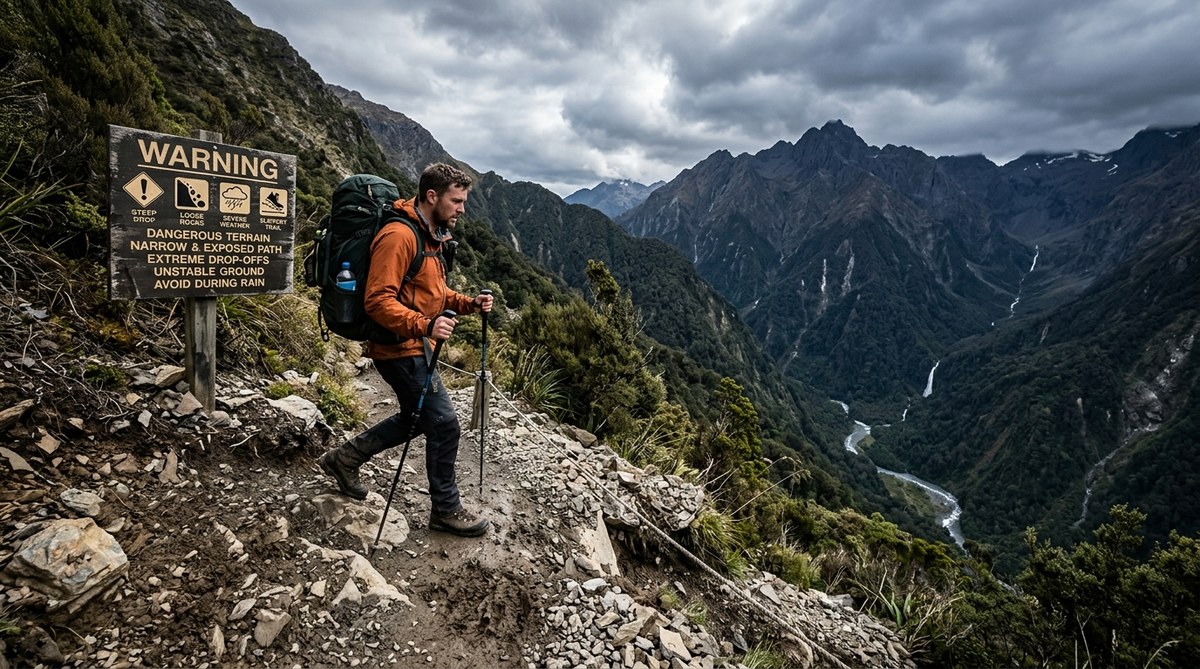
You lace up your boots at the trailhead, check your pack straps, and look ahead at the path disappearing into the trees. The map said this was a moderate route. But as you walk, the ground gets steeper. Loose rocks scatter underfoot. The trail markers vanish for a stretch. That sinking feeling creeps in. You wonder if you missed something. Recognizing dangerous hiking trail warning signs early can mean the difference between a memorable summit and a call for rescue. This guide will help you spot those red flags before trouble finds you.
Dangerous hiking trail warning signs fall into five categories: terrain instability, weather cues, navigation failures, water crossings, and wildlife activity. Learn to read each one, and you can turn back or adjust your plan before a minor hazard becomes a major emergency. Trust your gut, check official trail reports, and always carry a backup navigation tool.
Terrain Instability Is a Silent Threat
The ground beneath your feet can change in an instant. Loose scree, eroded tread, and exposed roots are common, but some signals demand immediate attention.
Watch for these terrain red flags
- Trail surface that has washed out completely, leaving a narrow ledge of dirt.
- Sections marked “closed” due to landslide risk or recent rockfall.
- Deep cracks in the soil along the edge of a cliff or steep slope.
- Piles of fresh rocks or debris blocking the path, especially after rain.
- Trail tread that suddenly narrows to less than a foot wide with a steep drop.
If you see any of these, stop and assess. A slip here could mean a long fall. Consider turning around or finding an alternate route. For more on matching trails to your ability, check out our guide on how to evaluate a hiking trail’s difficulty rating.
Weather Can Turn a Trail Dangerous Without Warning
Mountain weather changes fast. A clear morning can become an afternoon thunderstorm with lightning and flash floods. Knowing the forecast is step one. Recognizing danger signs in real time is step two.
Signs that weather is about to turn bad
- Dark clouds building directly overhead or in the direction you are heading. If you see cumulonimbus clouds forming, lightning risk is high.
- Sudden wind gusts that make you wobble on exposed ridges. Wind speeds above 30 mph can knock you off balance on narrow trails.
- Rapid temperature drop of more than 10 degrees Fahrenheit in under an hour. This signals a cold front or storm arrival.
- Hail or graupel falling, even if it is light. Hail often precedes severe thunderstorms.
- Water level rising in creeks or rivers you need to cross. Rain upstream can cause flash flooding miles away.
Expert advice: “If you hear thunder, you are within lightning range. Count the seconds between flash and boom. If it is less than 30 seconds, get off ridges and peaks immediately. Avoid lone trees and open fields. Crouch low on your toes, not sitting on the ground.”
For a deeper look at planning around weather, read our top tips for planning a safe and enjoyable trail hike.
Navigation Failures Are a Major Warning Sign
Getting lost is one of the most common dangerous hiking trail warning signs. It is not just about missing a turn. It is about realizing you cannot confirm your location and the trail is not where it should be.
Signs your navigation is failing
| Warning Sign | What It Means | What to Do |
|---|---|---|
| No trail markers for 15 minutes | The route may have faded or you veered off | Stop. Check your map or GPS. Retrace your steps to the last marker. |
| Trail splits with no sign or cairn | Unmarked junctions are common on unmaintained trails | Use a compass bearing. Mark your path with a small stick arrow. |
| Your phone GPS signal drops | Deep canyons or dense forest block satellites | Switch to a paper map and compass. Do not rely on phone alone. |
| You see no footprints or boot prints | The trail may be abandoned or you are off route | Turn around. Do not push forward hoping it will reappear. |
Navigation errors compound fast. If you are unsure, the safest move is to head back to your last known point. For more on staying oriented, see our top tips for navigating hidden mountain trails safely.
Water Crossings Can Become Deadly in Minutes
A calm creek in the morning can turn into a raging torrent by afternoon. Snowmelt and afternoon thunderstorms cause water levels to rise dramatically. Crossing a swollen river is one of the most dangerous hiking trail warning signs you can ignore.
How to evaluate a water crossing
- Check the flow speed. Throw a stick in. If it moves faster than you can walk, do not cross.
- Look for a wider, shallower section. Water moves slower where the channel is wide.
- Unbuckle your pack strap. If you fall, you need to shed your pack to swim.
- Use a trekking pole for stability. Plant it upstream of your body for better leverage.
- If the water is above your knees, find another route. The force of knee-deep moving water can sweep you off your feet.
If you are hiking in spring or after heavy rain, plan routes that avoid multiple creek crossings. For gear that helps you stay safe in wet conditions, check out our essential outdoor gear every hiker should pack for long trails.
Wildlife Activity Can Signal Hidden Dangers
Animals often sense danger before humans do. If you notice unusual wildlife behavior, pay attention. It could mean a predator is nearby, or the trail is blocked by a hazard.
Wildlife warning signs
- Birds suddenly taking flight in large numbers from a single area.
- Deer or elk running away from a specific direction, not just grazing.
- Carcasses or remains on the trail. This can attract bears or mountain lions.
- Fresh scat from large predators right on the trail. It means they are active in the area.
- Silence. If the forest goes quiet suddenly, something large is moving through.
Carry bear spray in bear country and know how to use it. Make noise as you hike to avoid surprising animals. For more on preparing for wildlife encounters, read our essential tips for planning your ultimate adventure travel trip.
Human Factors That Make a Trail More Dangerous
Not all warning signs come from nature. Sometimes the danger is in the planning or the people around you.
Signs that your own situation is risky
- You started later than planned and will finish in the dark without a headlamp.
- Your group is split up with some members far ahead or behind.
- You are low on water and the next source is uncertain.
- You feel unusually tired, dizzy, or short of breath at a moderate elevation.
- You ignored a posted warning sign at the trailhead.
These are all dangerous hiking trail warning signs that come from within. Listen to your body and your gut. If something feels off, adjust your plan. There is no shame in turning back. The mountain will be there tomorrow.
How to Build Your Personal Danger Checklist
Before every hike, run through a mental checklist. This takes less than two minutes and can save your trip.
Your pre-hike danger scan
- Check the weather forecast for the exact elevation you are hiking.
- Read recent trail reports from this year. Look for mentions of washouts, fallen trees, or snow.
- Verify your navigation tools have fresh batteries and you know how to use them.
- Tell someone your route and expected return time.
- Pack the Ten Essentials including extra layers, a headlamp, and a first aid kit.
For a full list of what to bring, check out our must-have gear for long-distance wilderness hikes.
When to Turn Around and When to Push Through
This is the hardest call to make. Every hiker wants to reach the summit or the waterfall. But dangerous hiking trail warning signs exist to keep you alive.
Use this framework
| Situation | Recommended Action |
|---|---|
| Trail is washed out with a steep drop | Turn around |
| Thunderstorm within 30 minutes | Turn around or wait it out in a safe spot |
| Lost for more than 30 minutes | Stop, assess, retrace steps |
| Water crossing above knees | Find another route or turn around |
| Group member injured or exhausted | Turn around or send someone for help |
| Light fading with no headlamp | Turn around immediately |
The key is to decide before you are in panic mode. Make the call while you still have energy and daylight.
Stay Sharp and Hike Another Day
Recognizing dangerous hiking trail warning signs is a skill you build with every trip. Start paying attention to the small things. The way the trail feels underfoot. The color of the sky. The behavior of birds. These clues are always there. You just need to learn to read them.
Next time you head out, take a moment at the trailhead. Run your checklist. Trust your instincts. And remember that the best hike is the one you finish safely. For more inspiration on where to go, browse our list of top 10 must-visit hiking trails in the U.S. for 2026. Happy trails, and stay safe out there.


Leave a Reply