
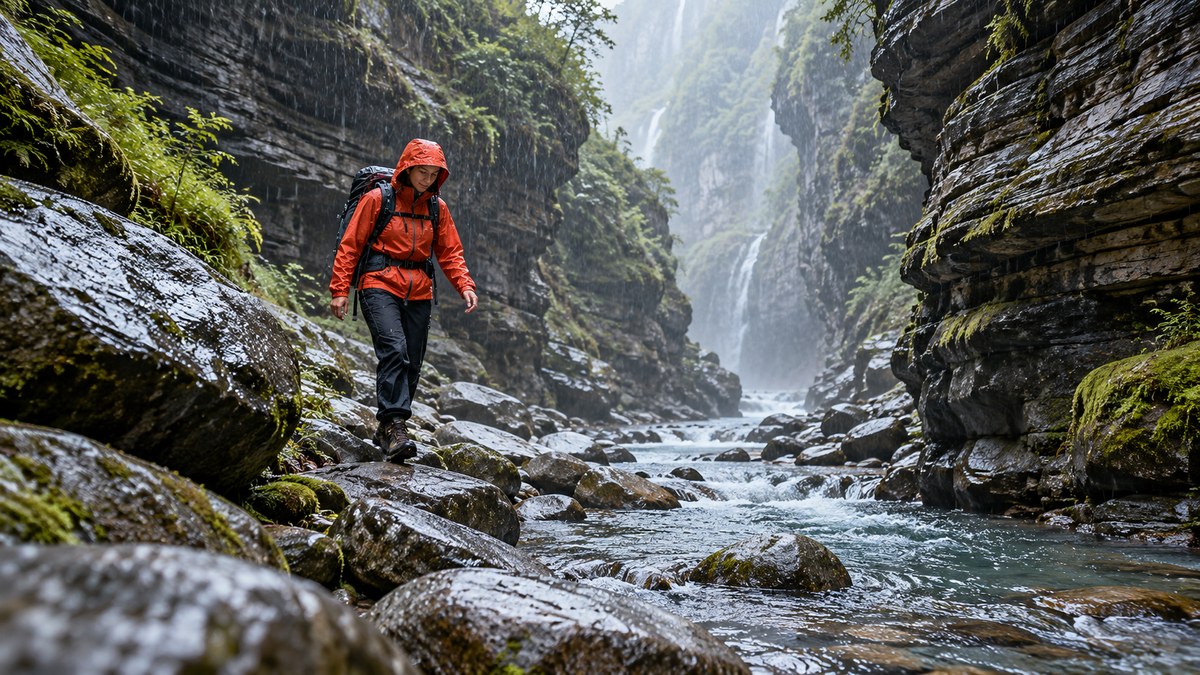
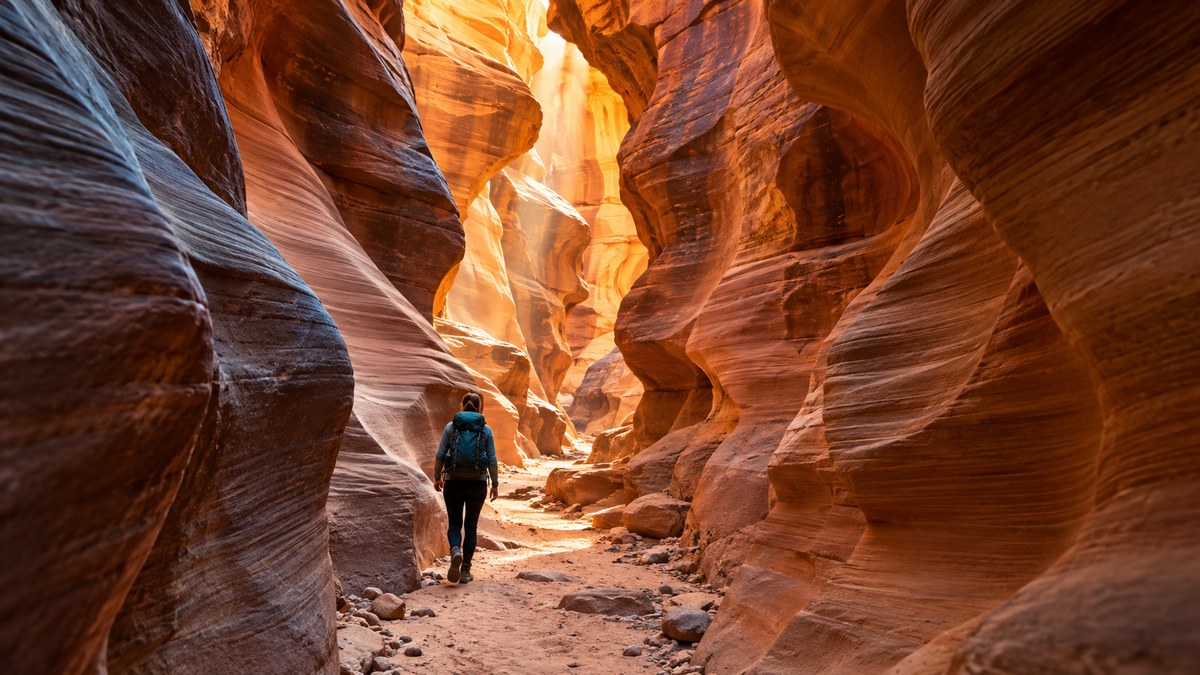
A canyon in the rain is a different world. The walls glow deeper shades of red and orange. The air smells clean and sharp. Water trickles down rock faces that were bone dry just hours ago. But that beauty comes with serious risk. Flash floods, slippery slabs, and hidden obstacles can turn a dream hike into a rescue situation. The goal is to enjoy that wet canyon magic without becoming a statistic.
Hiking a canyon in the rain requires three things: accurate weather forecasts, knowledge of your canyon’s drainage area, and the right gear to stay warm and mobile. If you can’t guarantee a dry exit window, turn around. Getting stuck isn’t just uncomfortable. It can be life threatening. Plan smart, stay alert, and know your limits.
Why Canyon Hiking Changes When the Sky Opens
Canyons act like funnels. Every drop of rain that falls on the plateau above eventually flows through the narrow floor where you are walking. That means a storm that seems far away can send a wall of water down a slot canyon with no warning.
The danger is not just from rain directly overhead. A storm ten miles upriver can flood your canyon while you stand in sunshine. This is the number one reason hikers get trapped. They see blue sky and assume they are safe.
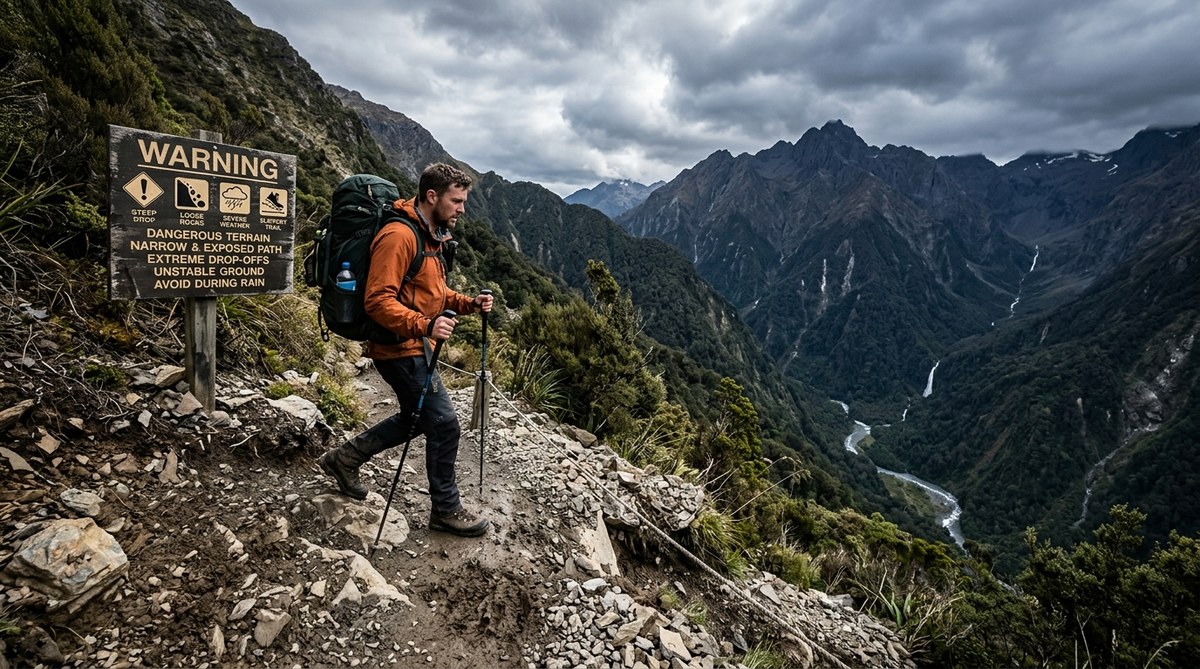
Beyond flash floods, wet rock becomes incredibly slick. Sandstone, limestone, and granite all lose traction when wet. A step that felt solid in dry conditions can send you sliding toward a drop off.
How to Read the Sky and the Terrain
Before you enter any canyon, check the weather for the entire watershed. Not just the trailhead. Look at the topography. If the canyon drains a large area of high desert or forest, a storm upstream can gather volume fast.
Here is a practical checklist to use before you go:
- Check the National Weather Service forecast for the full drainage basin.
- Look for “area forecast discussion” that mentions thunderstorm potential.
- Avoid canyons with a forecast of more than a 30 percent chance of rain.
- Note the time of day. Afternoon thunderstorms are common in the Southwest during monsoon season (July through September).
- Check river gauges upstream if they are available.
If you are already in the canyon and the sky turns dark, pay attention to these warning signs:
- A sudden change in water clarity. Clear water turning muddy means runoff is coming.
- Floating debris like sticks or leaves moving faster than normal.
- A low rumbling sound that grows louder. That is the sound of moving water.
- Water level rising at your feet within minutes.
“If you see the water turn brown, you have about 30 seconds to find high ground. Do not hesitate. Drop your pack if you have to and climb.” — Grand Canyon Search and Rescue veteran, 2025 training seminar.
Essential Gear for Wet Canyon Hiking
Your gear list changes when rain is in the forecast. You need items that keep you dry, warm, and able to move quickly.
Clothing and Footwear
- Waterproof boots with good ankle support. Wet trails are uneven. A rolled ankle in a canyon is a serious problem.
- Wool or synthetic socks. Cotton socks lose insulation when wet and cause blisters.
- Quick drying pants. Denim is dangerous. It absorbs water, gets heavy, and chills you fast.
- Rain jacket with a hood. A poncho can snag on rocks. A fitted jacket lets you scramble.
- A lightweight insulating layer. Even in summer, wet canyon air can drop your core temperature.
Safety Tools
- Headlamp with fresh batteries. If you get stuck waiting out a storm, you may be hiking out in the dark.
- A physical map and compass. Phones die. Service fails in deep canyons.
- A personal locator beacon or satellite messenger. This is not overkill. If you get pinned by rising water, you need rescue.
- Trekking poles. They provide stability on slick rock and let you test water depth before stepping.
The 10 Essential Items
Every hiker should carry the standard ten essentials. For canyons in the rain, prioritize:
- Navigation (map, compass, GPS backup)
- Sun protection (you still need it between storms)
- Insulation (extra layer in a dry bag)
- Illumination (headlamp plus spare batteries)
- First aid supplies (focus on wound care and blister treatment)
- Fire starter (wet conditions make hypothermia a real risk)
- Emergency shelter (a space blanket or bivy sack)
- Food (high energy, no cook)
- Water (more than you think you need; moving water may not be safe to drink)
- Knife or multi tool
For a deeper look at building your kit, read our guide on essential outdoor gear every hiker should pack for long trails.
The Five Step Decision Process for Rainy Canyon Hikes
When the clouds roll in, follow these steps in order. Do not skip any of them.
- Reassess the forecast. Pull out your phone or satellite messenger. Check if conditions have changed since you started. If the chance of rain has increased above 30 percent, consider turning back.
- Identify escape routes. Look at your map. Are there places where you can climb out of the canyon floor to higher ground? Mark them before you need them.
- Check the water level. Find a calm pool or slow moving section. Mark the water level with a rock or a stick. Come back in five minutes. If the water has risen, you need to move.
- Communicate your plan. Tell your hiking partners exactly what you are doing. If you split up, set a meeting point on high ground.
- Make the call early. The biggest mistake is waiting too long. If you are unsure, turn around. Canyons will still be there tomorrow.
Common Mistakes and How to Avoid Them
| Mistake | Why It Is Dangerous | What to Do Instead |
|---|---|---|
| Ignoring upstream weather | A storm miles away can flood your canyon | Check forecasts for the full drainage area |
| Wearing cotton clothing | Cotton loses insulation when wet and causes hypothermia | Wear wool or synthetic fabrics |
| Hiking alone without communication | No one knows where you are if you get trapped | Carry a satellite messenger and tell someone your plan |
| Crossing flowing water without testing | Currents can sweep you off your feet | Use a trekking pole to test depth and current strength |
| Staying in a slot canyon during rain | Walls funnel water rapidly | Exit slot canyons immediately if rain starts |
How to Navigate Slick Rock Safely
Wet sandstone is like walking on ice with a sandpaper texture. You can still move, but you need to change your technique.
- Shorten your stride. Take smaller, deliberate steps.
- Place your foot flat. Edging increases the chance of a slip.
- Use your hands. Three points of contact are better than two.
- Avoid walking on sloping slabs if an alternate route exists.
- Test each hold before committing your weight.
If you do slip, try to sit down immediately. A controlled slide on your rear is better than a fall that twists an ankle or breaks a bone.
What to Do If You Get Stuck
Despite your best planning, things can go wrong. If you find yourself trapped by rising water or impassable terrain, stay calm and follow these steps.
- Find the highest ground you can reach within the canyon. Look for ledges, boulders, or shelves that are above the water line.
- Stay together. Do not split up unless one person is going for help and has clear communication.
- Signal for help. Use a whistle (three blasts is the universal signal), a mirror, or your satellite messenger.
- Conserve your energy. Do not try to swim against moving water. If you must cross, look for the widest, shallowest section.
- Wait for the water to recede. Most flash floods in desert canyons drop as fast as they rise. It may take only a few hours.
For more on staying safe on the trail, check out our top tips for planning a safe and enjoyable trail hike.
When to Reschedule Your Hike
Some conditions are not worth the risk. Cancel or reschedule your canyon hike if:
- The forecast calls for thunderstorms in the afternoon.
- There is a flash flood watch or warning for the area.
- You are hiking alone and have no way to communicate.
- The canyon is a narrow slot with no escape routes.
- You are not confident in your ability to navigate wet terrain.
There is no shame in turning around. The best hikers know that discretion is part of the skill set. You can always come back on a dry day.
Building a Weather Smart Mindset
The most important tool you carry is your judgment. Experience helps, but you can build good judgment by practicing small decisions.
Start with short, easy canyons on days with low rain chances. Pay attention to how the rock feels when wet. Notice how water moves across the ground. Learn to read the sky for building clouds. Over time, you will develop an instinct for when conditions are safe and when they are not.
Pair that instinct with solid gear and a clear plan. If you are looking for top tips for choosing durable and lightweight hiking gear, we have a guide that covers exactly what to look for.
The Right Way to Enjoy a Rainy Canyon
A canyon in the rain is one of the most beautiful places on earth. The colors saturate. The air cools. The sound of water echoes off the walls. You can have that experience safely if you respect the environment.
Watch the sky. Know your drainage. Carry the right gear. Make decisions early. And always have an exit plan.
If you do those things, you will hike out muddy, tired, and grinning. And you will already be planning your next rainy canyon adventure.


Leave a Reply