
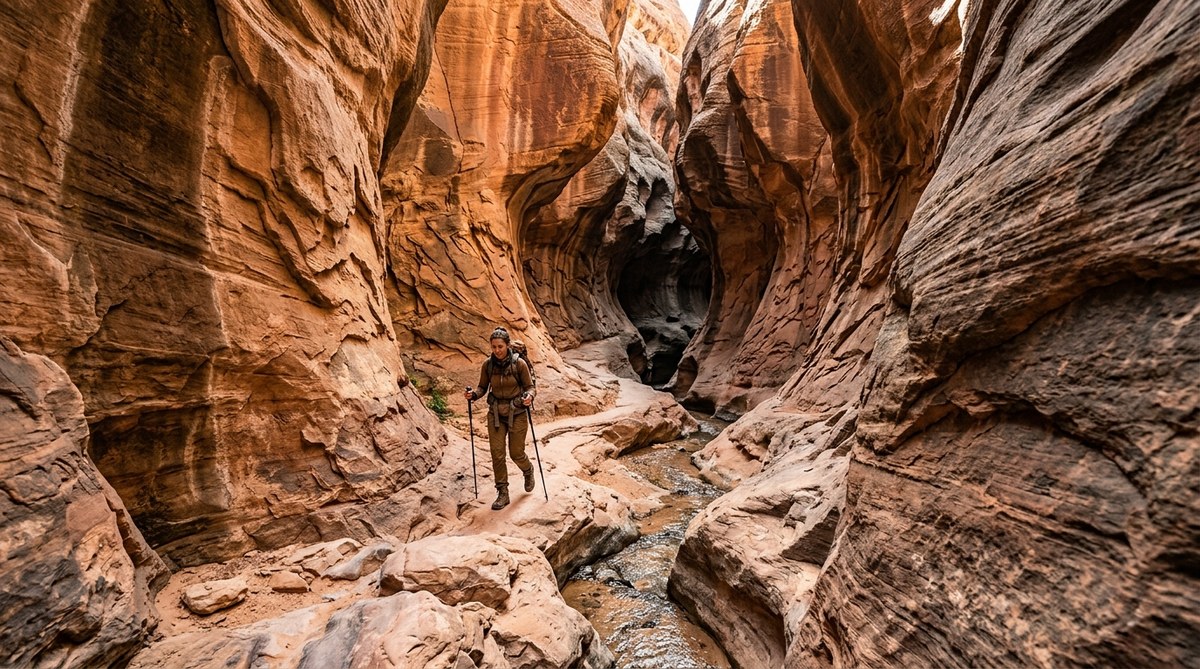
You have hiked the famous slots in Zion. You have done the South Rim at the Grand Canyon. You have waited in line for a photo at Antelope Canyon. Now what? Now you look for the trails that do not appear on the standard park brochures. The paths that require a little research, a little bushwhacking, and a willingness to get your boots dirty. These secret canyon hikes exist all over the American West, and they offer something the crowded landmarks cannot: true solitude.
Secret canyon hikes reward hikers who put in the work. You need solid navigation skills, proper gear, and a willingness to read the landscape instead of a signpost. This guide covers eight lesser-known canyon trails across the Southwest, plus practical tips on how to find your own hidden routes without relying on social media hotspots.
What Makes a Canyon Hike “Secret”
A secret canyon hike is not the same as a forgotten trail. Most of the routes listed here appear on some maps, but they are easy to miss. They lack the signage of major attractions. They may require a high-clearance vehicle to reach the trailhead. Some involve route-finding through dry washes or scrambling over boulders.
The common thread is low traffic. You can hike these canyons on a Saturday in peak season and see only a handful of other people. That is rare in 2026, and it is worth the extra effort.
Eight Secret Canyon Hikes Worth Finding
1. Paria Canyon (U.S. Bureau of Land Management, Utah/Arizona border)
Most people drive past Paria on their way to Page or Kanab. They do not know that this canyon system holds some of the most dramatic slot canyons in the country without the permit lottery of The Wave. The Buckskin Gulch section is the longest slot canyon in the world, but the real secret is the full Paria Canyon traverse. It takes two to four days and requires a permit, but you will have miles of narrow sandstone walls to yourself.
2. Little Wild Horse Canyon (San Rafael Swell, Utah)
Bell Canyon gets the crowds. Little Wild Horse, just down the road, gets the same geology with a fraction of the foot traffic. The trail follows a sandy wash through twisting narrows that open into wide amphitheaters. It is an out-and-back that you can make into a loop by connecting with the Bell Canyon trail. Go on a weekday in spring or fall and you might have the whole place to yourself.
3. Mule Canyon (Cedar Mesa, Utah)
Cedar Mesa is full of hidden canyons, but Mule Canyon stands out because it combines hiking with archaeology. The canyon contains well-preserved Ancestral Puebloan granaries tucked into the cliff faces. The trail is unmarked. You park at a pullout, walk down a dry wash, and keep your eyes on the walls. The granaries look like small stone huts built into the alcoves. Do not touch anything. Take photos and leave the site exactly as you found it.
4. The Grotto (Enchanted Valley, Colorado)
Colorado has no shortage of canyon hikes, but The Grotto near the Enchanted Valley area remains off most radar screens. The trail follows a creek through a narrow limestone canyon with small waterfalls and deep pools. The route requires several stream crossings, so wear waterproof boots or bring sandals for the wet sections. The payoff is a hidden grotto at the end where water pours over a moss-covered cliff.
5. Aravaipa Canyon (Arizona)
Aravaipa is a perennial stream canyon in the Sonoran Desert. The water flows year-round, which means you will be wading through pools and walking on sandbars. The Bureau of Land Management limits permits to 50 people per day, and they often do not sell out. The canyon walls rise 800 feet in places, and the riparian corridor feels like a jungle tucked inside the desert. Expect to get wet up to your waist in some sections.
6. The Black Ledge (Grand Staircase-Escalante, Utah)
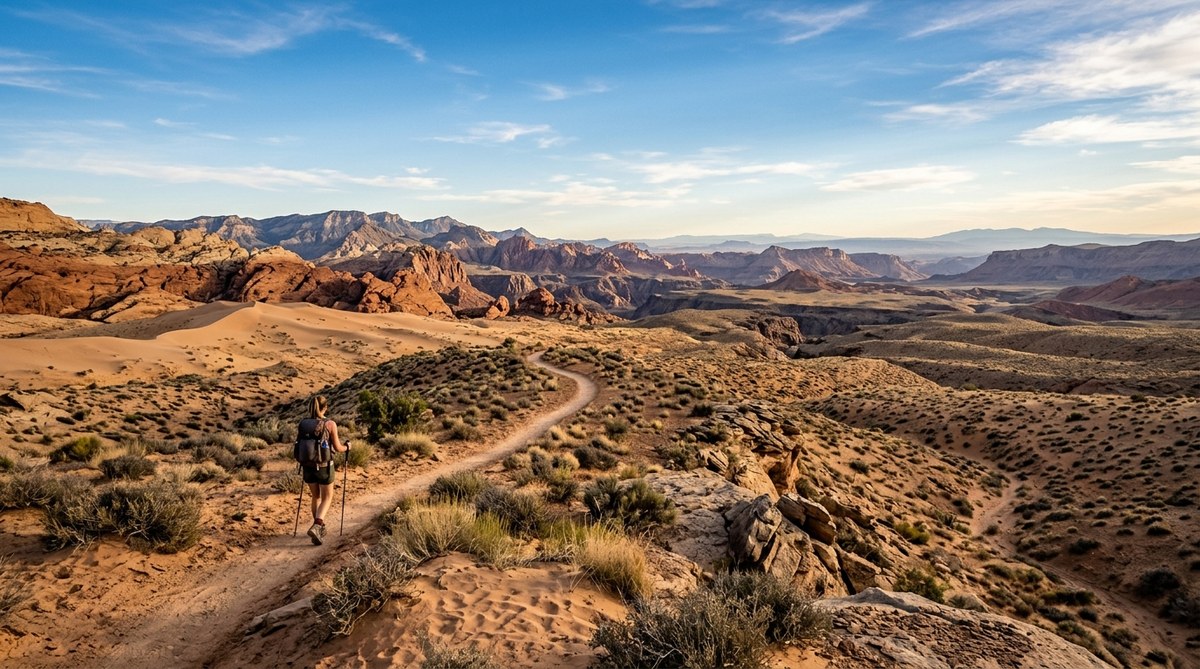
Escalante is full of secret canyons, but most hikers head straight for Spooky Gulch or Peek-a-Boo. The Black Ledge is a lesser-known route that follows a dark sandstone bench above a deep canyon. The trail is not maintained. You will need to navigate by cairns and GPS. The views from the ledge look down into a maze of side canyons that see almost no foot traffic.
7. Tonto Trail (Grand Canyon National Park, Arizona)
Everyone knows the South Kaibab Trail. Almost nobody knows the Tonto Trail. This route runs east-west across the Tonto Platform, a flat shelf that sits between the rim and the river. It connects several side canyons and offers a completely different perspective of the Grand Canyon. The trail is hot, exposed, and requires carrying all your water. That is exactly why it stays quiet. For a day hike, start at the South Kaibab and hike east along the Tonto to the Pipe Creek overlook.
8. The Narrows of the Escalante River (Glen Canyon National Recreation Area, Utah)
The Narrows in Zion get all the attention. The Narrows of the Escalante River are wider, quieter, and just as beautiful. The hike follows the riverbed through a canyon with walls that narrow to 30 feet in places. You will wade through cold water for most of the hike. The best section starts at the Escalante River trailhead and goes upstream for about four miles. Pack a dry bag and wear neoprene socks.
How to Find Your Own Secret Canyon Hikes
You do not need a guidebook to find hidden canyons. You need a method. Here is a process that works for finding off-the-beaten-path trails in any canyon country.
-
Study topographic maps. Look for thin blue lines that represent intermittent streams. These dry washes often lead to slot canyons. The thinner the line, the narrower the canyon.
-
Check land ownership. Use the Bureau of Land Management or U.S. Forest Service maps to confirm the area is public land. Avoid private property and tribal lands unless you have explicit permission.
-
Read trip reports from five years ago. Old reports often mention routes that have since fallen off the popular radar. Social media creates hype. Old blog posts preserve the quiet trails.
-
Look for trails that dead-end. A trail that ends at a canyon rim without a loop option sees less traffic. People prefer loops. Out-and-backs to dead ends are often empty.
-
Call the local ranger station. Rangers know the quiet spots. They will not give you the secret swimming hole, but they will point you toward a trail that matches your skill level and desire for solitude.
Essential Gear for Canyon Hiking
Canyon hiking requires different gear than a standard mountain trail. Here is a breakdown of what you need and what you can leave behind.
| Gear Item | Why It Matters | Common Mistake |
|---|---|---|
| Topographic map or GPS app | Canyons block cell signal. Paper maps do not fail. | Relying on phone battery alone. |
| Water filter | Many canyon streams are silty but drinkable after filtering. | Assuming all canyon water is safe. |
| Neoprene socks | Wet feet get cold fast in narrow canyons. | Wearing cotton socks that stay wet all day. |
| Headlamp | Slot canyons get dark early. A headlamp is not optional. | Forgetting that the sun sets two hours earlier in a deep canyon. |
| First aid kit with blister care | Wet feet and abrasive sandstone cause blisters fast. | Bringing a kit with only band-aids. |
| Rope (10 to 20 feet) | Some dryfalls require a short rappel or a handline. | Carrying a rope but not knowing how to use it. |
A Note on Safety
Canyons are dangerous in ways that other trails are not. Flash floods top the list. Check the weather forecast for the entire watershed, not just the trailhead. A storm 20 miles away can send a wall of water down a slot canyon with no warning.
“If you see standing water in a canyon, turn around. If you hear a rumble that sounds like thunder but the sky is clear, get to high ground immediately. That rumble is water.” — Bureau of Land Management safety bulletin
Other risks include hypothermia from wet clothes, ankle injuries on loose rock, and getting lost in a maze of side canyons. Always tell someone your exact route and expected return time.
Where to Start If You Are New to Canyon Hiking
If you have never hiked a secret canyon before, start with a short, well-documented route like Little Wild Horse Canyon. It gives you the experience of narrow sandstone walls without the navigation challenge of an unmarked wash. From there, work up to longer routes like Mule Canyon or Aravaipa.
For more guidance on picking the right trail for your skill level, check out our guide to choosing the perfect hiking trail for your adventure. If you want to build your gear kit, read our essential outdoor gear guide for long trails.
How to Keep These Trails Secret
The best way to keep secret canyon hikes quiet is to share them responsibly. Do not post GPS coordinates on social media. Do not tag the location in your photos. If someone asks where you went, tell them the general area and let them do the research. The work of finding the trail is part of the reward.
You can also practice Leave No Trace principles. Pack out all trash, including toilet paper and orange peels. Stay on durable surfaces. Do not disturb archaeological sites. These canyons have been here for millions of years. With care, they will stay wild for the next generation of hikers.
Finding Solitude on the Trail
Secret canyon hikes are not just about the scenery. They are about the experience of being alone in a wild place. That feeling is harder to find every year as more people discover the outdoors. The good news is that most hikers stick to the same 20 trails. If you are willing to step off that list, you can find solitude even in popular areas.
For more ideas on avoiding the crowds, read our article on how to find solitude on popular hiking trails. It covers timing, route selection, and the mindset shift that turns a crowded park into a personal wilderness.
Your Next Step
Pick one canyon from this list. Research the route. Check the weather. Pack your gear. Go on a weekday in the off-season. Walk into the canyon and listen to the silence. That is the whole point. These secret canyon hikes are waiting for you. All you have to do is go.

Leave a Reply