
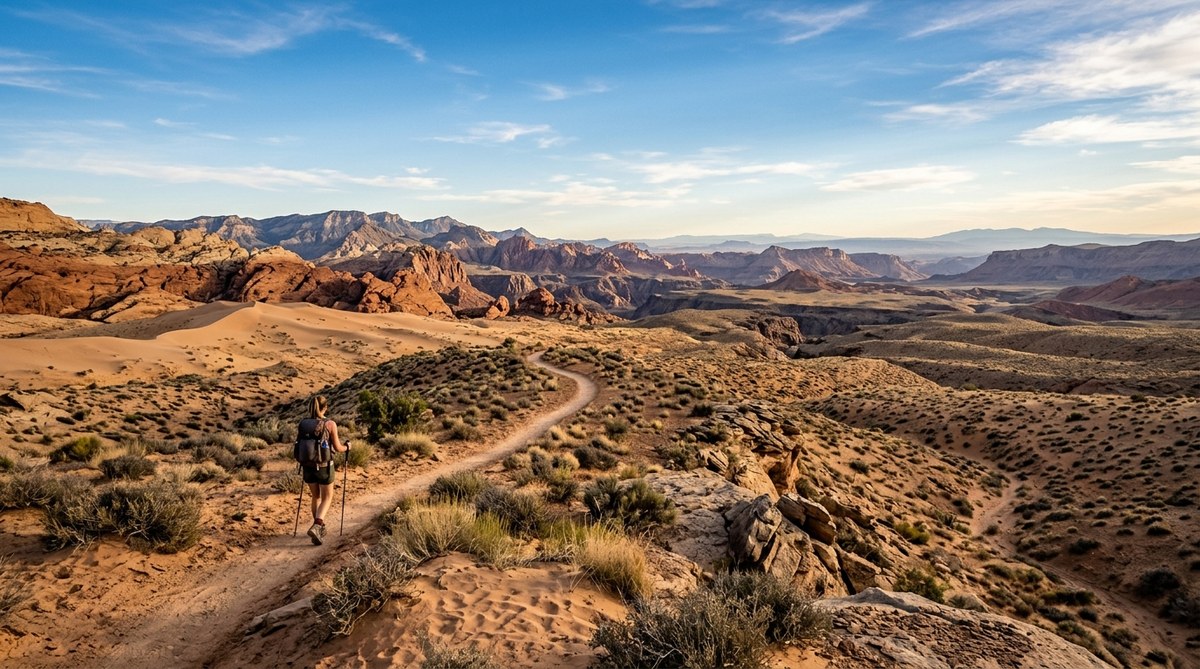
The desert has a way of stripping away noise. Not just the sound of traffic or the hum of daily life, but the mental clutter too. When you hike a trail that stretches across open sandstone and sky, the silence becomes a presence. That is the draw for many experienced hikers in 2026. You are not just covering miles. You are looking for a place where the only footprints ahead are your own, and the view is yours alone to photograph.
True solitude on desert hiking trails comes from choosing routes that see fewer visitors and timing your hike outside peak seasons. Focus on trails in remote national monuments or wilderness areas. Pack extra water, a reliable navigation tool, and clothing for temperature swings. The payoff is unmatched quiet, dramatic light for photography, and a deep connection with the landscape.
Why Solitude Matters in Desert Hiking
Crowds have a way of diluting the desert experience. When you hear voices around every bend, the magic fades. Solitude lets you notice the small things: the way wind shapes a dune, the call of a canyon wren, the shifting colors at sunset. Photography also improves without other hikers in your frame. For seasoned hikers, the goal is seclusion that still provides safe access and rewarding scenery.
The best desert trails for solitude are often in lesser known parts of the Southwest. Think Bureau of Land Management land or state parks rather than the most famous national parks. Trails that require a bit more effort to reach, like a longer approach or a route with some route finding, naturally filter out casual visitors.
Choosing the Right Desert Trail for Solitude
Not all desert trails feel remote. A trail close to a visitor center or campground will likely see traffic. Look for trails that are at least 6 miles round trip, have limited parking, or are not heavily promoted on social media. The table below compares trail types and their solitude potential.
| Trail Type | Typical Solitude Level | Best for Photography |
|---|---|---|
| Short loop near a scenic viewpoint | Low (many day hikers) | Limited (crowds) |
| Out and back in a canyon | Medium (fewer after first mile) | Good (depth) |
| Long ridgeline or wash walk | High (very few hikers) | Excellent (wide views) |
| Off-trail cross country | Very high (requires navigation) | Exceptional (unique angles) |
When evaluating a trail, check recent trip reports on sites like AllTrails or Reddit. Look for comments like “saw only two people the whole day” or “trail was empty on a Tuesday.” Also consider the season. Early spring and late fall offer mild temperatures and fewer visitors than summer or spring break. Winter can be ideal in lower elevation deserts.
How to Plan a Solitary Desert Hike
Planning is critical when you will be alone on the trail. Follow these steps to ensure a safe and rewarding experience.
- Pick your window carefully. Start at dawn to beat the heat and also avoid other hikers. A 6 a.m. start often means the trail is empty. Aim to finish before noon in summer months.
- Research water sources. Many desert trails have no reliable water. Carry at least one gallon per person per day for hiking, plus extra for your camera gear and spills. Use a hydration bladder for easy access.
- Share your plan. Leave your itinerary with someone back home. Include trail name, start time, estimated return, and vehicle location. Check in when you finish.
- Bring navigation tools. Cell service is spotty. Carry a GPS device or a physical map and compass. Know how to read terrain features before you go.
- Pack for temperature swings. Desert mornings can be cold even in spring. Layers let you adjust as the sun climbs. A thin long-sleeve shirt also protects your arms for photography stops.
For more on evaluating trail difficulty before you go, see our guide on how to evaluate a hiking trail’s difficulty rating.
Essential Gear for Desert Solitude
Packing the right items makes your solo hike safer and more comfortable. Here is a checklist of gear that experienced desert hikers rely on.
- Sun protection: Wide brim hat, SPF 50+ sunscreen, and sunglasses. The desert sun is intense even on cloudy days.
- Extra water containers: A collapsible water bottle in your daypack allows you to carry more without added weight.
- Satellite messenger: Devices like a Garmin inReach provide emergency communication where cell phones do not work.
- Headlamp with fresh batteries: Even a day hike can stretch into dusk if you linger for sunset photos. A headlamp keeps you safe.
- First aid kit with blister care: Heat and dry air can crack skin. Include antiseptic wipes and mole skin.
- Trekking poles: They reduce strain on your knees during steep descents and help you scan the ground for snakes.
If you are building your gear kit from scratch, our list of essential outdoor gear every hiker should pack for long trails covers all the basics.
Photography Tips for Desert Landscapes
The quiet of a desert trail is a gift for photographers. Without crowds, you can wait for the perfect light. Here is how to make the most of it.
“The desert reveals its best side in the hour after sunrise and the hour before sunset. Find a composition that includes foreground interest, like a cactus or rock formation, and let the wide sky do the rest.” – Marta Chen, landscape photographer and frequent desert hiker.
Set your camera for a low ISO to keep detail in the bright sand and deep shadows. Use a small aperture (f/11 or f/16) to keep everything sharp from front to back. If you are shooting into the sun, a lens hood reduces glare. A tripod is worth carrying for long exposure shots of moving clouds or star trails after dark. Many trails that offer solitude also have little light pollution, making them perfect for astrophotography.
Top Desert Hiking Trails for Solitude in 2026
Several trails across the United States deliver the combination of scenic beauty and low traffic. One of the best resources is our roundup of 7 desert hiking trails that offer stunning solitude and scenery. That list covers routes in California, Utah, Arizona, and New Mexico. Each trail was chosen for its quiet atmosphere and photographic potential.
If you want to find more options on your own, look for trails in national monuments like Grand Staircase-Escalante or Canyons of the Ancients. State parks such as Valley of Fire in Nevada also see fewer visitors than nearby national parks. Another tactic is to search for top tips for exploring hidden nature walks near you and apply them to desert regions.
Staying Safe Alone in the Desert
Hiking alone requires extra caution. The desert can be unforgiving. Always prioritize safety over that perfect photo or the desire to push further.
- Check the forecast. Flash floods happen even in dry washes miles from a storm. Avoid hiking in canyons if rain is predicted upstream.
- Know the signs of heat exhaustion. Dizziness, nausea, and confusion mean you need to stop, find shade, and drink water. Rest until you feel normal before continuing.
- Watch for wildlife. Rattlesnakes, scorpions, and mountain lions are part of the desert ecosystem. Give them space. Do not approach or corner them.
- Carry a whistle. Three short blasts is a universal distress signal. It carries further than your voice and uses less energy.
- Turn back early. If conditions change or you feel tired, head back. The trail will still be there another day.
For a deeper look at solo hiking safety, read our article on how to plan a solo hiking adventure on the Appalachian Trail. The principles of navigation, self reliance, and communication apply to any remote environment, including the desert.
Finding Your Quiet Place in the Desert
The best desert hiking trails for solitude are not found on a list of the most popular hikes. They require a little research, a willingness to drive a few extra miles, and the confidence to walk alone. In 2026, that quiet is becoming more rare. But it still exists in the far corners of the Mojave, the Sonoran, and the Colorado Plateau. When you step onto a trail and hear nothing but the wind, you will understand why solitude matters. Pack your gear, pick a trail that promises silence, and let the desert show you its most intimate side. Your next adventure is waiting. Just remember to bring enough water and a sense of wonder.

Leave a Reply