
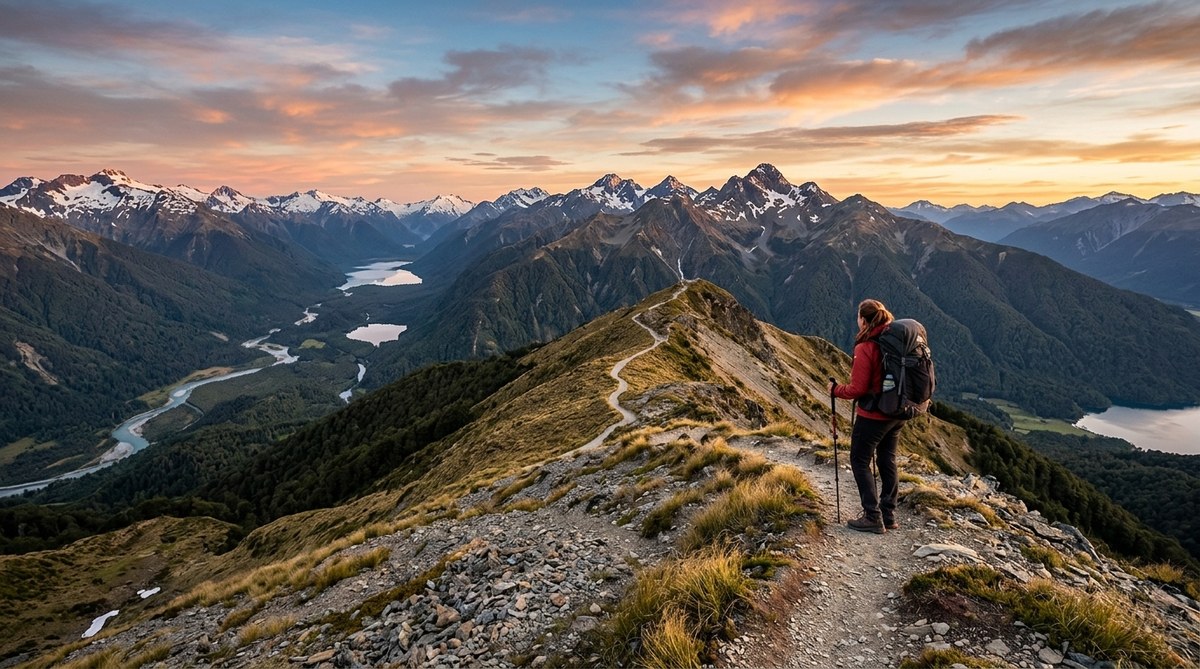
There is a difference between walking through the woods and letting a trail reshape how you see the world. A thru-hike does not just test your legs. It rewires your mind. It strips away the noise of daily life and forces you to pay attention to the small things: the light through the leaves, the sound of your own breath, the way a mountain makes you feel small in the best possible way. If you have been craving a deeper connection with the outdoors, these seven trails offer exactly that. Each one has the power to change your relationship with nature forever.
A thru-hike is more than a physical challenge. It is a mental and emotional reset. The seven trails listed here range from the iconic Appalachian Trail to the remote Hayduke Trail. Each offers a unique way to reconnect with nature. Whether you have two weeks or six months, there is a trail here that will change how you see the world and yourself.
Why a Thru-Hike Changes Your Perspective
Most of us experience nature in short bursts. A weekend camping trip. An afternoon hike. A quick walk in a local park. These are valuable, but they do not force the kind of transformation that happens when you spend weeks or months living outside. A thru-hike removes the safety net of civilization. You carry everything you need. You wake up with the sun. You learn to read the weather, the terrain, and your own limits.
The result is a shift in perspective that stays with you long after you come home. You start noticing the natural world in ways you never did before. You appreciate the silence. You understand your place in the ecosystem. You stop seeing nature as a backdrop and start seeing it as a living, breathing partner in your journey.
The 7 Epic Thru-Hikes That Will Transform Your Relationship with Nature
1. The Appalachian Trail (AT)
The Appalachian Trail is the granddaddy of American thru-hikes. Stretching roughly 2,190 miles from Springer Mountain in Georgia to Mount Katahdin in Maine, it takes most hikers five to seven months to complete. The AT is a test of endurance, patience, and mental grit. But more than that, it is a masterclass in slow living.
You walk through fourteen states. You cross forests, meadows, and rocky peaks. You meet other hikers who become family. The trail teaches you that progress is measured in steps, not miles. By the time you reach Katahdin, you have learned to trust your body, your gear, and the rhythm of the natural world.
For a deeper look at planning a solo trip on this trail, check out our guide on how to plan a solo hiking adventure on the Appalachian Trail.
2. The Pacific Crest Trail (PCT)
The Pacific Crest Trail runs 2,650 miles from the Mexican border to the Canadian border through California, Oregon, and Washington. It offers a completely different experience from the AT. The PCT is drier, more exposed, and often more solitary. You walk through the Mojave Desert, the Sierra Nevada, and the Cascade Range.
The transformation here comes from the sheer scale of the landscape. You feel the vastness of the American West. You learn to find water in dry places. You watch the seasons change as you move north. The PCT teaches self-reliance in a way that few other trails can match.
If you are planning a multi-day hike on a similar route, our guide on how to plan a multi-day hike on the John Muir Trail in 2026 offers practical advice that applies to the Sierra section of the PCT.
3. The Continental Divide Trail (CDT)
The Continental Divide Trail is the wildest of the three major US thru-hikes. At roughly 3,100 miles, it follows the Rocky Mountains from Mexico to Canada. It is less developed than the AT or PCT. You will face more route-finding, more remote stretches, and fewer resupply points.
This trail changes your relationship with nature because it forces you to become a true participant. You cannot just follow a well-marked path. You have to read the land. You have to make decisions based on weather, water, and terrain. The CDT builds a deep, almost primal connection to the wilderness.
For tips on navigating challenging terrain, read our article on top tips for navigating hidden mountain trails safely.
4. The John Muir Trail (JMT)
The John Muir Trail is a 211-mile gem through the Sierra Nevada. It runs from Yosemite National Park to Mount Whitney, the highest peak in the lower 48. It is shorter than the big three, but it packs an incredible amount of beauty into a manageable distance.
The JMT transforms your relationship with nature through intimacy. You walk through alpine lakes, granite passes, and ancient forests. You see the kind of landscapes that make you stop and stare. The trail is named after John Muir, the naturalist who believed that nature could heal the human spirit. After a week on this trail, you will understand why.
5. The Colorado Trail (CT)
The Colorado Trail runs 486 miles from Denver to Durango. It crosses eight mountain ranges and passes through six national forests. It is a great option for hikers who want a thru-hike experience but cannot commit to a five-month journey. Most hikers finish it in four to six weeks.
The transformation here comes from the altitude. You walk above 10,000 feet for much of the trail. You learn to move slowly, breathe deeply, and appreciate the thin air. The Colorado Trail teaches you that nature demands respect. It also rewards you with some of the most stunning views in the country.
6. The Arizona Trail (AZT)
The Arizona Trail stretches 800 miles from the Mexican border to the Utah border. It crosses the Sonoran Desert, the Mogollon Rim, and the Grand Canyon. This trail offers a unique kind of transformation because it forces you to confront extreme conditions.
You learn to hike in the heat. You learn to find shade and water. You learn to move early in the morning and rest during the heat of the day. The AZT changes your relationship with nature by showing you that the desert is not empty. It is full of life, if you know how to look.
7. The Hayduke Trail
The Hayduke Trail is for the truly adventurous. It is an 800-mile route through the red rock country of Utah and Arizona. It is not an official trail. It is a route that requires serious navigation skills. You will cross slickrock, slot canyons, and remote plateaus.
This trail transforms your relationship with nature because it removes all traces of civilization. There are no trail markers. No shelters. No resupply points. You are alone with the land. The Hayduke Trail teaches you that nature does not owe you anything. You have to earn every step.
How to Choose the Right Thru-Hike for You
Not every trail is right for every person. Here is a simple process to help you decide.
- Assess your time commitment. Do you have two weeks or six months? The JMT can be done in three weeks. The AT takes five to seven months.
- Consider your fitness level. Some trails have more elevation gain than others. The CDT and Hayduke require strong navigation skills and physical endurance.
- Think about your tolerance for solitude. The PCT and AT have more hikers and trail towns. The CDT and Hayduke are much more remote.
- Look at the season. Each trail has a specific weather window. The PCT is best from April to September. The AZT is best in spring and fall.
- Match the landscape to your soul. Do you want forests and rivers? Go with the AT. Do you want deserts and canyons? Try the Hayduke or AZT.
Common Mistakes to Avoid on a Thru-Hike
| Mistake | Why It Hurts | How to Avoid It |
|---|---|---|
| Overpacking | Extra weight slows you down and causes injuries | Pack light and test your gear before the trail |
| Ignoring weather windows | Snow and heat can be dangerous | Research the optimal season for your trail |
| Skipping navigation practice | Getting lost wastes time and energy | Practice with a map and compass before you go |
| Not planning resupply points | Running out of food in a remote area is serious | Map out every resupply before you start |
| Forgetting foot care | Blisters can end a hike | Change socks often and air out your feet |
What to Pack for a Transformative Thru-Hike
Your gear is your lifeline. Packing smart is not just about comfort. It is about safety and mental clarity. Here is a bulleted list of essentials that every thru-hiker should carry:
- A lightweight tent or hammock for shelter
- A sleeping bag rated for the coldest nights on your trail
- A reliable stove and fuel canister
- A water filter or purification tablets
- A map, compass, and GPS device
- A first aid kit with blister care
- Extra socks and a dry layer for sleeping
- High-calorie, lightweight food
- A headlamp with extra batteries
- Sun protection: hat, sunglasses, and sunscreen
For a full breakdown of what to bring, see our guide on essential outdoor gear every hiker should pack for long trails.
“The mountains are calling and I must go.” John Muir said that over a century ago, and it still rings true. A thru-hike is not a vacation. It is a conversation with the earth. You will come home tired, dirty, and changed. That is the whole point.
The Mental Shift That Happens on a Thru-Hike
The physical challenges of a thru-hike are obvious. The mental shift is less visible but more powerful. After a few weeks on the trail, your priorities change. You stop caring about your phone. You stop worrying about work. You start noticing the color of the sky, the texture of the bark, the sound of the wind.
This shift does not happen overnight. It builds slowly. It comes from the repetition of walking day after day. It comes from the silence. It comes from the moments when you feel completely present. By the end of the trail, you have a new relationship with nature. It is no longer something you visit. It is something you belong to.
If you want to find more quiet moments on popular trails, read our advice on how to find solitude on popular hiking trails.
How to Prepare for Your First Thru-Hike
Preparation is key. Do not just show up at the trailhead and hope for the best. Here are the steps that will set you up for success:
- Train your body with long day hikes carrying a loaded pack. Aim for 10 to 15 miles with elevation gain.
- Test all your gear on overnight trips. Find out what works and what does not.
- Plan your resupply strategy. Know where you can buy food and how much you need to carry between towns.
- Learn basic first aid and navigation. These skills can save your life.
- Start with a shorter trail. The JMT or Colorado Trail are great for building confidence.
For more on planning, check out our guide on top tips for planning a safe and enjoyable trail hike.
How These Trails Transform Your Relationship with Nature
Each trail offers a different kind of transformation. The AT builds community and patience. The PCT builds self-reliance and awe. The CDT builds resilience and humility. The JMT builds intimacy and wonder. The Colorado Trail builds strength and endurance. The AZT builds adaptability and respect. The Hayduke builds courage and independence.
No matter which trail you choose, the result is the same. You come home seeing the world differently. You notice the natural world more. You feel more connected to it. You understand that you are part of it, not separate from it.
Your Next Steps Toward the Trail
You do not have to quit your job and disappear for six months. Start small. Pick a trail that fits your schedule and fitness level. Plan your gear. Train your body. Then take the first step. That is all it takes.
The seven trails listed here are not just hikes. They are invitations. They are chances to reset, reconnect, and remember what matters. The mountains are waiting. All you have to do is show up.
If you are still unsure where to start, take a look at our ultimate guide to choosing the perfect hiking trail for your adventure for more personalized advice.
The Trail Will Change You
A thru-hike is not a test of how far you can walk. It is a test of how much you are willing to let go. Let go of your schedule. Let go of your comfort. Let go of the version of yourself that thinks nature is something to look at from a car window.
When you finish a thru-hike, you carry the trail with you. You see the world through different eyes. You notice the small things. You feel the wind on your skin and remember that you are alive. That is the gift of these seven epic trails. They do not just show you nature. They bring you back to it.
Start planning your trip today. Your transformation is waiting on the trail.

Leave a Reply