
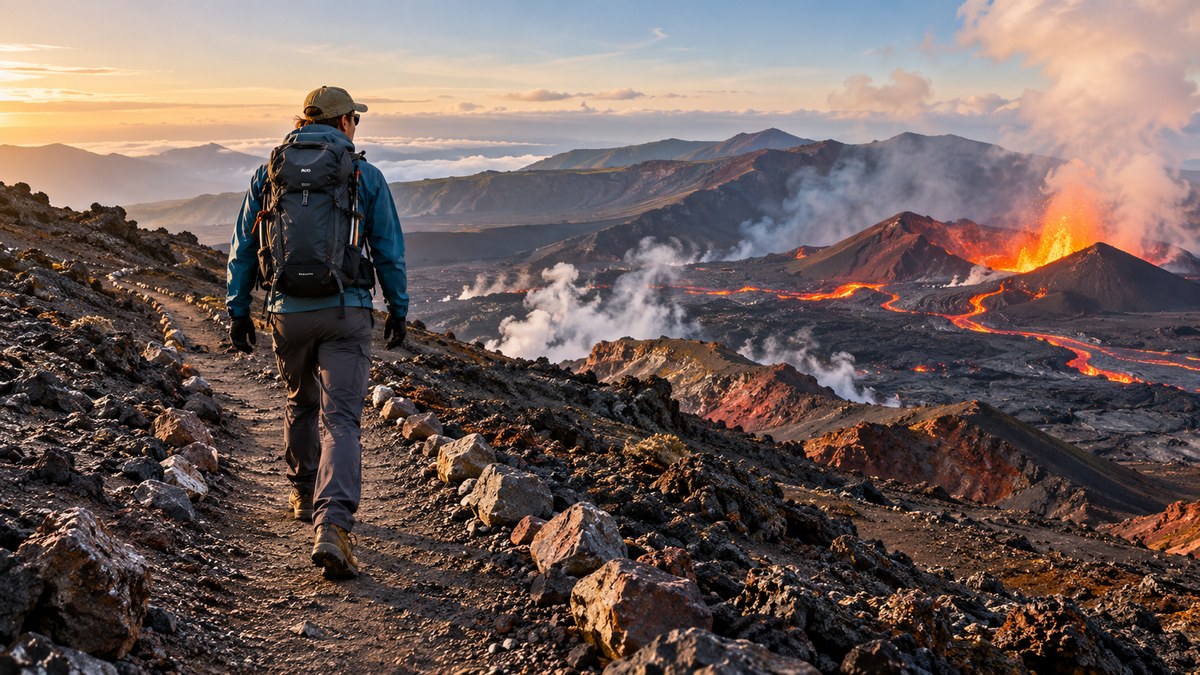
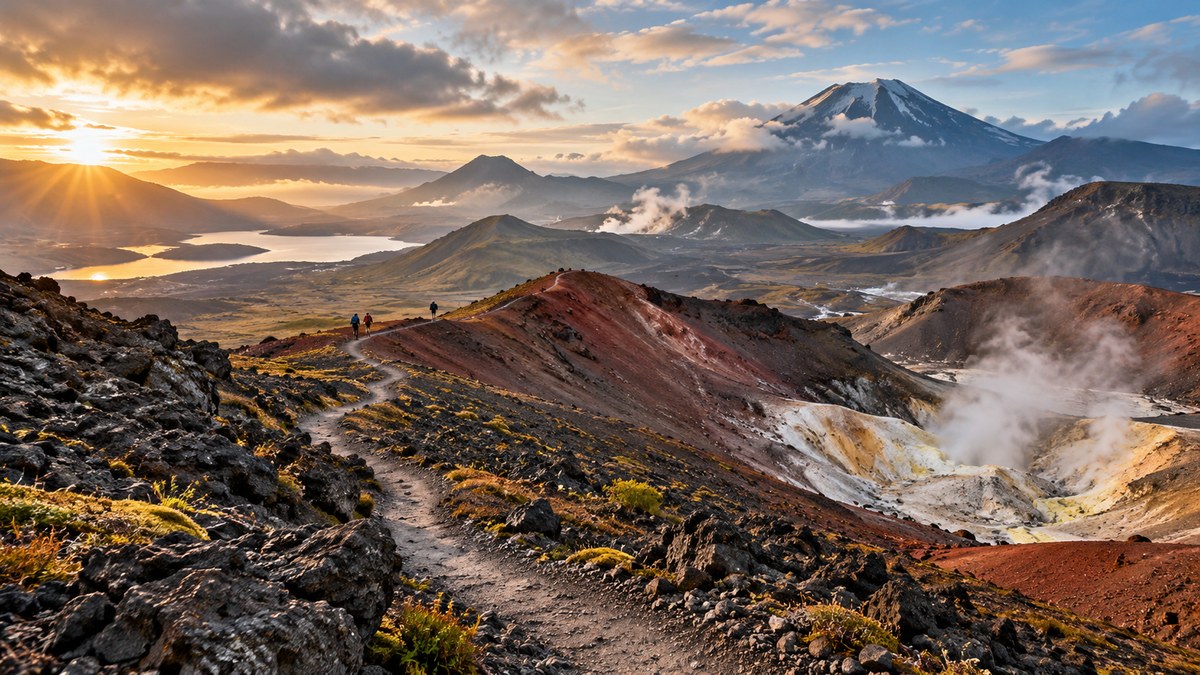
Standing on the rim of a steaming crater feels electric. The ground beneath your boots hums with geothermal energy, and the view stretches for miles across a landscape shaped by fire. But that same ground can crack without warning. Steam vents can burn you in seconds. And the air you breathe might contain gases your lungs were never meant to handle. Hiking a volcano is not like hiking a mountain. The rules change when the earth is alive. Whether you are planning a trek up Mount St. Helens, exploring the volcanic fields of Iceland, or tackling a peak in the Pacific Ring of Fire, you need to prepare for hazards that don’t exist on a standard trail. These volcano hiking safety tips will help you come home with incredible photos instead of a trip to the emergency room.
Volcano hiking demands respect for four main dangers: unstable ground, toxic gases, extreme heat, and sudden weather shifts. Always check the alert level before you go, wear sturdy boots with ankle support, carry a gas mask rated for volcanic emissions, and stay on marked trails. Never walk on fresh lava crusts or approach crater edges without a guide. Your best safety tool is preparation, not luck.
Understand the Volcano Alert System Before You Go
Volcano monitoring agencies use a color coded alert system that tells you exactly what is happening underground. Green means the volcano is in its normal background state. Yellow means there is elevated activity above known background levels. Orange means the volcano is showing signs of an eruption that could happen within weeks or days. Red means an eruption is imminent or underway.
Check the alert level from the US Geological Survey or the local volcanic monitoring agency at least 48 hours before your hike. If the alert is orange or red, cancel your trip. No view is worth walking onto ground that could open beneath you.
Many travelers make the mistake of checking conditions only at the trailhead. By then, it is too late to change your plans. Bookmark the monitoring page for your destination and check it daily during the week before your hike.
What to Pack for Volcanic Terrain
Standard hiking gear is not enough when you cross lava fields and approach fumaroles. Your equipment needs to handle heat, sharp rock, and poor air quality. Here is what belongs in your pack:
- Sturdy boots with thick soles. Lava rock is sharp and can cut through trail runners.
- Long pants and long sleeves. They protect your skin from radiant heat and accidental contact with hot surfaces.
- A bandana or buff to cover your mouth and nose in dusty areas.
- A gas mask with a particulate filter rated for sulfur dioxide and hydrogen sulfide. A standard N95 mask will not filter volcanic gases.
- At least three liters of water per person. Volcanic trails are often exposed to full sun with no shade.
- A headlamp. Volcanic caves and lava tubes are dark, and some trails cross terrain where a twisted ankle could leave you stuck after sunset.
- Trekking poles. They help you test the stability of the ground ahead of you.
For a full list of what to carry on any long trail, read our guide on essential outdoor gear every hiker should pack for long trails.
The Seven Volcano Hiking Safety Tips You Need to Know
These seven rules cover the most common ways hikers get hurt on volcanoes. Follow them every time.
-
Stay on the marked trail. Volcanic crust can be deceiving. What looks like solid ground might be a thin shell over a lava tube or a pocket of superheated steam. Park rangers and guides mark safe paths for a reason. Leave the trail and you risk falling through or stepping onto unstable ground.
-
Check wind direction before approaching any steam vent. Fumaroles and steam vents release gases that can knock you unconscious. Always approach from upwind. If the wind shifts and you smell sulfur or feel your throat burning, back away immediately.
-
Never walk on black sand or dark rock after rain. Wet volcanic sediment is slippery. The dark surface can also hide cracks and holes. Wait for the ground to dry, or choose a different route.
-
Keep at least 100 feet away from crater edges. Crater rims are often unstable. The edge can crumble under your weight without warning. Take your photos from a safe distance and use a zoom lens.
-
Watch for signs of ground heating. If you see steam rising from the soil, or if the ground feels warm through your boots, move away. That area could be a thin crust over a geothermal feature.
-
Protect your electronics. Volcanic ash and dust are abrasive. They can scratch camera lenses and clog phone ports. Keep your gear in ziplock bags until you need it.
-
Turn back at the first sign of physical distress. Headache, dizziness, nausea, or a metallic taste in your mouth can mean gas exposure. Do not push through. Descend to lower elevation and fresh air immediately.
Common Mistakes vs. Smart Practices
The table below shows what separates a safe volcano hike from a dangerous one.
| Situation | Common Mistake | Smart Practice |
|---|---|---|
| Approaching a fumarole | Walking close to get a better photo | Stay upwind and at least 50 feet away |
| Crossing a lava field | Taking shortcuts across smooth looking crust | Follow marked paths only |
| Feeling dizzy from gas | Ignoring it and continuing uphill | Descend immediately to fresh air |
| Packing for the hike | Bringing only a daypack with snacks | Carry gas mask, extra water, and headlamp |
| Checking conditions | Looking at the weather forecast only | Check volcano alert level and wind direction |
| Footwear | Wearing lightweight trail shoes | Wear thick soled boots with ankle support |
| Group behavior | Spreading out across the terrain | Stay close together in a single file line |
How to Recognize Dangerous Volcanic Gases
Volcanic gases are invisible. You cannot see them, and some of them you cannot smell. That makes them one of the most dangerous hazards on any volcano hike. Here are the main gases to watch for:
- Sulfur dioxide. Smells like burnt matches. It irritates your eyes and throat. At high concentrations, it causes breathing difficulty.
- Hydrogen sulfide. Smells like rotten eggs. At low levels it is unpleasant. At high levels it deadens your sense of smell and can cause loss of consciousness.
- Carbon dioxide. No smell, no color. It pools in low lying areas because it is heavier than air. If you walk into a depression and suddenly feel drowsy, get out.
“If you feel any irritation in your throat or eyes, or if you feel lightheaded, stop and turn around. Do not wait to see if it gets worse. Gases can incapacitate you in seconds, not minutes.” — Dr. Sarah Kanaka, volcanologist and field safety instructor for the Hawaiian Volcano Observatory
When to Hike with a Guide
Some volcanoes are safe enough for an experienced hiker to tackle solo. Others require a guide for your own safety. Here is how to decide.
Hike without a guide if:
– The volcano is dormant or has a green alert level.
– The trail is well marked and maintained by a park service.
– You have experience with off trail navigation and volcanic terrain.
– You are hiking in a group of at least three people.
Always hire a guide if:
– The volcano is active with a yellow alert level.
– You plan to enter a lava tube or volcanic cave.
– The trail crosses glacial ice on a volcanic peak.
– You are hiking in a remote area with no cell service.
Guides carry gas monitors, know the safe routes, and have emergency communication equipment. If you are hiking somewhere like Mount Nyiragongo in the DRC or the volcanoes of Indonesia, a guide is not optional. It is the only safe choice.
For help finding trails that match your skill level, check out our list of top 10 must-visit hiking trails in the U.S. for 2026.
What to Do in an Emergency
Even with perfect preparation, things can go wrong. Here is your emergency protocol for the most likely scenarios.
If someone inhales volcanic gas:
Move them to fresh air immediately. Lay them on their side if they are unconscious. Call for emergency evacuation. Do not try to give them mouth to mouth resuscitation in a gas contaminated area.
If someone falls on sharp lava:
Apply direct pressure to stop bleeding. Clean the wound with your drinking water. Cover it with a sterile bandage. Lava rock carries bacteria that can cause infections. Evacuate to a hospital as soon as possible.
If the ground collapses beneath you:
Stay calm. Call out to your group. Do not move around, because you might break through more crust. Wait for help to arrive with a rope or a stable route out.
If you get caught in a volcanic eruption:
This is rare if you checked the alert level, but it can happen. Cover your mouth and nose with a cloth. Seek shelter behind a large rock or in a depression. Protect your head from falling debris. Wait for the ash fall to stop, then move downwind to escape the gas plume.
Your Volcano Hike Starts with Respect
Volcanoes offer some of the most dramatic hiking experiences on the planet. Walking across a landscape that was molten rock a thousand years ago puts your own life into perspective. But that perspective means nothing if you end up burned, gassed, or stranded on a mountainside.
Treat every volcano as if it could wake up. Check the alerts. Pack the right gear. Stay on the trail. And if something feels wrong, trust your instincts and head back down. The volcano will still be there tomorrow. Make sure you are too.
For more help planning your next adventure, read our top tips for planning a safe and enjoyable trail hike and our guide on how to evaluate a hiking trail’s difficulty rating.

Leave a Reply